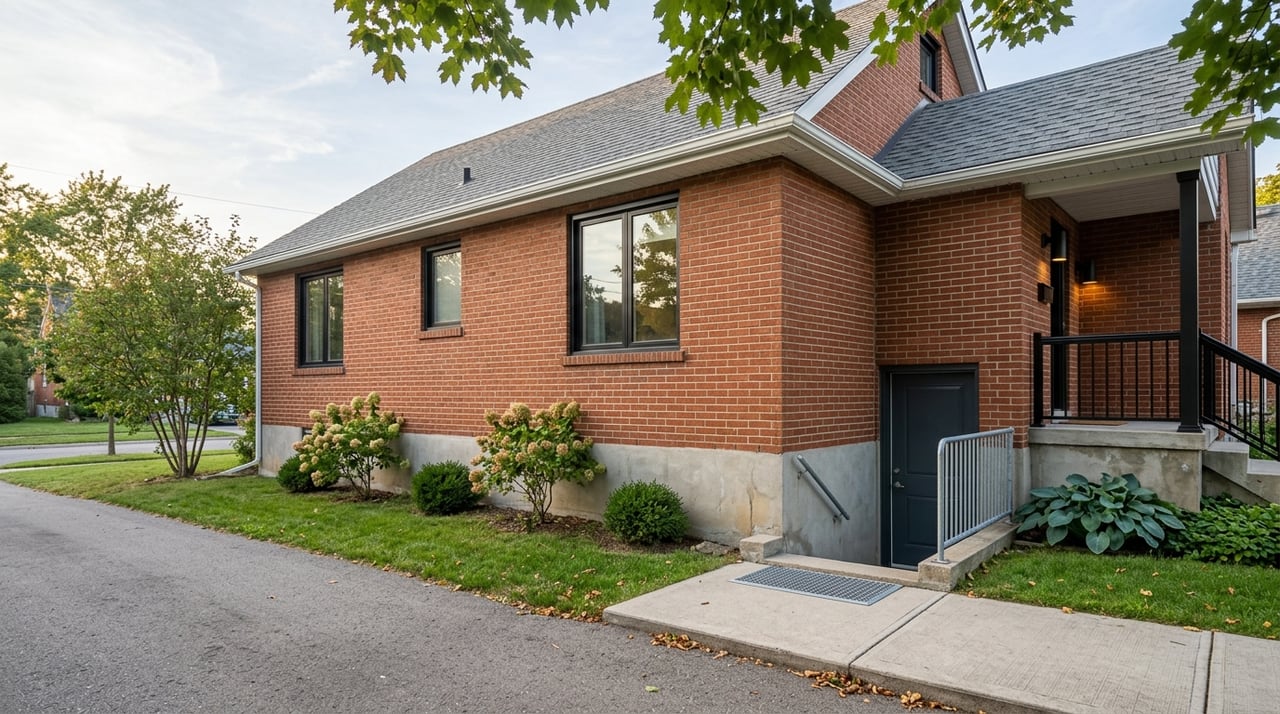
If you are thinking about buying a rental property in Scarborough, the headline rent number can look promising at first glance. But a deal that seems solid on paper can change quickly once you factor in vacancy, condo fees, taxes, financing, and rent control. This guide will help you break down the math in a practical way so you can evaluate a Scarborough rental with more clarity and less guesswork. Let’s dive in.
Why Scarborough Needs a Local Lens
Scarborough is not one uniform rental market. It is a large east-end area with different submarkets, property types, and tenant demand patterns that can produce very different investment results.
The City of Toronto’s 2021 community profile counted 623,610 residents and 218,920 private dwellings in Scarborough. Of those dwellings, 78,730 were rented, or 36.0% of the total. The same profile shows a housing mix with a large apartment presence, with 35.2% of occupied dwellings in apartment buildings with 5 or more storeys.
That matters because property type affects your numbers. A condo unit, an older apartment-style property, and a house with a secondary unit can all rent differently and carry very different repair, fee, and vacancy risks.
Scarborough also has a meaningful share of older housing stock. The city profile shows that 36.9% of dwellings were built between 1961 and 1980, which can be important when you are budgeting for repairs and ongoing maintenance.
Start With Gross Rent
The first step is simple: estimate your gross annual rent.
Use this formula:
- Monthly rent × 12 = Gross annual rent
If you are looking at a two-bedroom condo in Scarborough City Centre with an asking rent of $2,286, the gross annual rent would be:
- $2,286 × 12 = $27,432
This gives you a starting point, not a final answer. Asking rent is not the same as achieved rent, especially in a market where renters may have more negotiating power.
Treat Asking Rent Carefully
Current rent snapshots are helpful, but they should be used as market checks, not guarantees. June 2026 data showed Scarborough City Centre averaging $2,350 overall and $2,286 for two-bedroom units, while Scarborough Village averaged $2,249.
TRREB’s Q1 2026 condominium rental report also showed GTA average condo rents at $2,246 for one-bedroom units and $2,939 for two-bedroom units. At the same time, the report noted that rental supply remained ample and renters had negotiating power.
CMHC’s 2025 rental market report adds more context. It reported a 3.0% vacancy rate for Toronto purpose-built rentals and a 1.0% vacancy rate for Toronto condo rentals, while some Scarborough-area submarkets showed vacancy rates of 1.0% in Wexford-Maryvale, 1.6% in Rouge, and 2.2% in Morningside.
For newer projects, lease-up can be even softer. CMHC noted that projects completed since 2022 had nearly 7% vacancy and that 75% offered at least one incentive, most commonly free rent.
Calculate Gross Yield
Once you estimate annual rent, the next step is gross yield.
Use this formula:
- Gross annual rent ÷ Purchase price = Gross yield
Let’s use a Scarborough example tied to recent east-end condo pricing. TRREB’s Q1 2026 condo market data showed Toronto E11 averaging $423,412 and Toronto E10 averaging $392,250. These districts do not line up perfectly with Scarborough boundaries, but they are useful directional benchmarks.
Using the $423,412 price and $27,432 annual rent:
- $27,432 ÷ $423,412 = 6.48% gross yield
Using the $392,250 price and the same rent:
- $27,432 ÷ $392,250 = 6.99% gross yield
That is a good example of why entry price matters. Even with the same rent, a lower purchase price can materially improve your top-line yield.
For context, pairing Toronto’s average condo rent of $2,939 with the citywide average condo price of $649,330 implies a rough gross yield of about 5.43% before expenses.
Move Beyond Yield to NOI
Gross yield is useful, but it is not enough to judge an investment properly. You need to estimate net operating income, or NOI.
Use this formula:
- Gross rent minus vacancy, property tax, insurance, repairs and maintenance, condo fees, management, and other operating costs = NOI
This is the point where many deals start to look different. A property can appear attractive based on rent alone, but produce a much thinner return once real operating costs are included.
A Scarborough Condo Example
Here is an illustrative pro forma using the $423,412 purchase example and the $2,286 monthly rent:
- Gross annual rent: $27,432
- Vacancy at 3%: $822.96
- Property tax: $3,249
- Condo fees: $6,000
- Insurance and repairs reserve: $1,800
- Management at 5%: $1,371.60
That leaves an estimated NOI of about $14,188.
From there, you can estimate cap rate:
- NOI ÷ Purchase price = Cap rate
- $14,188 ÷ $423,412 = 3.35% cap rate
This is a much more realistic picture of performance than gross yield alone.
Add Financing Last
After NOI, you can layer in your mortgage to estimate cash flow after debt.
In this same example, if the purchase is financed at 80% loan-to-value, with a 5.25% interest rate and a 25-year amortization, the monthly mortgage payment would be about $2,030.
That would leave the property at roughly negative $847 per month before tax in this sample scenario. This is the key lesson for many investors: a property can show decent rent and still produce negative monthly cash flow once financing and operating costs are added.
Don’t Ignore Taxes and Closing Costs
Your first-year return should include acquisition costs. In Toronto, both Ontario land transfer tax and Toronto municipal land transfer tax apply.
On a $423,412 purchase, the combined land transfer taxes come to about $9,886.48, before the Toronto MLTT administration fee. On a $392,250 purchase, the combined taxes are about $8,717.50. Toronto also charges a $102.56 MLTT administration fee plus HST on taxable transactions.
Property taxes also need to be built into your annual budget from day one. Toronto’s 2026 total residential property tax rate is 0.767311%, and tax is based on phased-in assessed value, not simply the price you paid.
Using the $423,412 purchase as a rough proxy, annual residential property tax works out to about $3,249. Your actual tax bill may differ, but this is a helpful underwriting estimate.
Check Rent Control Early
One of the most important checks in Ontario is whether the unit falls under the rent increase guideline.
Ontario’s 2026 rent increase guideline is 2.1%, and most private residential rental units are covered by the Residential Tenancies Act, including condos and basement apartments. In most cases, rent can only be increased after 12 months and with 90 days’ written notice.
A key exception is for units that were not occupied for residential purposes on or before November 15, 2018. Those units may be exempt from the rent increase guideline.
This can materially change your long-term revenue assumptions. If you are comparing two properties with similar rents today, their future income growth may look very different depending on rent-control status.
Scarborough Submarkets Can Change the Math
Not all Scarborough investment properties should be underwritten the same way. A condo in Scarborough City Centre may have a different rent-to-price profile than a property in a lower-vacancy pocket or an older building with higher upkeep.
Vacancy can vary by area, and older stock can carry more maintenance risk. The City of Toronto profile also noted that 33.7% of renter households in Scarborough spent more than 30% of household income on shelter costs, which suggests affordability sensitivity can matter when you are setting rent expectations.
That does not mean Scarborough is weak. In many cases, it means you need to underwrite with discipline and avoid assuming perfect occupancy, top-of-market rent, or frictionless lease-up.
Build Appreciation Scenarios, Not Guarantees
It is reasonable to think about long-term appreciation, but it is smarter to model a range of outcomes than rely on one forecast.
On the same $423,412 purchase price, a five-year value would be about:
- $467,481 at 2% annual appreciation
- $515,145 at 4% annual appreciation
- $566,621 at 6% annual appreciation
That range shows why scenario planning matters. Your monthly cash flow, your entry price, and your hold period all work together, and appreciation should be treated as one possible part of the return, not the only one.
A Simple Scarborough Underwriting Checklist
Before you buy, make sure you have answers to these questions:
- What is the realistic achieved rent, not just the asking rent?
- What vacancy rate fits this specific submarket and property type?
- Are there lease-up incentives or renter concessions nearby?
- Is the unit subject to Ontario’s rent increase guideline?
- What are the condo fees, and what do they cover?
- What annual repair and insurance budget is reasonable?
- What will property taxes likely be based on assessed value?
- What are your land transfer taxes and closing costs?
- What does the property look like on NOI and cap rate?
- What does it look like after mortgage payments?
If a deal still works after those questions, you are looking at it the right way.
Why the Numbers Matter More in Scarborough
Scarborough can offer more accessible condo entry prices than the citywide average, and that can improve gross yield. But strong investing is not about stopping at the first promising number.
The better approach is to test the property from multiple angles: realistic rent, local vacancy, true operating costs, financing pressure, and long-term growth assumptions. That is how you avoid buying a property that looks good in a spreadsheet headline but underperforms in real life.
If you want a clear, numbers-driven second opinion on a Scarborough rental property, neropropertygroup.com can help you evaluate the deal with a practical long-term lens.
FAQs
How do you calculate gross yield on a Scarborough rental property?
- Divide the annual gross rent by the purchase price. For example, $27,432 in annual rent on a $423,412 purchase is about 6.48% gross yield.
What vacancy rate should you use for a Scarborough rental property?
- It depends on the property type and submarket. CMHC reported 1.0% condo rental vacancy for Toronto and Scarborough-area neighbourhood figures ranging from 1.0% to 2.2%, while newer projects completed since 2022 showed much higher vacancy.
Are Scarborough condo rents guaranteed at asking price?
- No. Asking rents are a starting point only. Current market conditions show ample supply in parts of the GTA, renter negotiating power, and incentives in some newer buildings.
Does rent control apply to Scarborough rental properties?
- In many cases, yes. Ontario says most private residential rental units are covered, but units not occupied for residential use on or before November 15, 2018 may be exempt from the rent increase guideline.
What extra costs should you include when buying a rental property in Scarborough?
- Include property taxes, condo fees if applicable, insurance, repairs, vacancy, management, Ontario land transfer tax, Toronto municipal land transfer tax, and financing costs.
Why can a Scarborough rental property have negative cash flow even with solid rent?
- Because gross rent is only the starting point. Once you subtract vacancy, taxes, condo fees, maintenance, management, and mortgage payments, monthly cash flow can turn negative even if gross yield looks decent.